

CRM Migration Timeline: How Long Does On-Premise to SaaS Really Take in 2024?
The shift from on-premise customer relationship management systems to cloud-based SaaS solutions represents one of the most significant digital transformations for modern businesses. Yet one question consistently stops SMB decision-makers in their tracks: How long will this actually take?
The answer isn’t straightforward, but understanding the realistic timeline and industry trends can help you plan effectively and avoid common pitfalls. This guide breaks down what you need to know about CRM migration duration and what’s changed in the market in recent years.
The Industry Shift: Why Now is the Right Time to Migrate
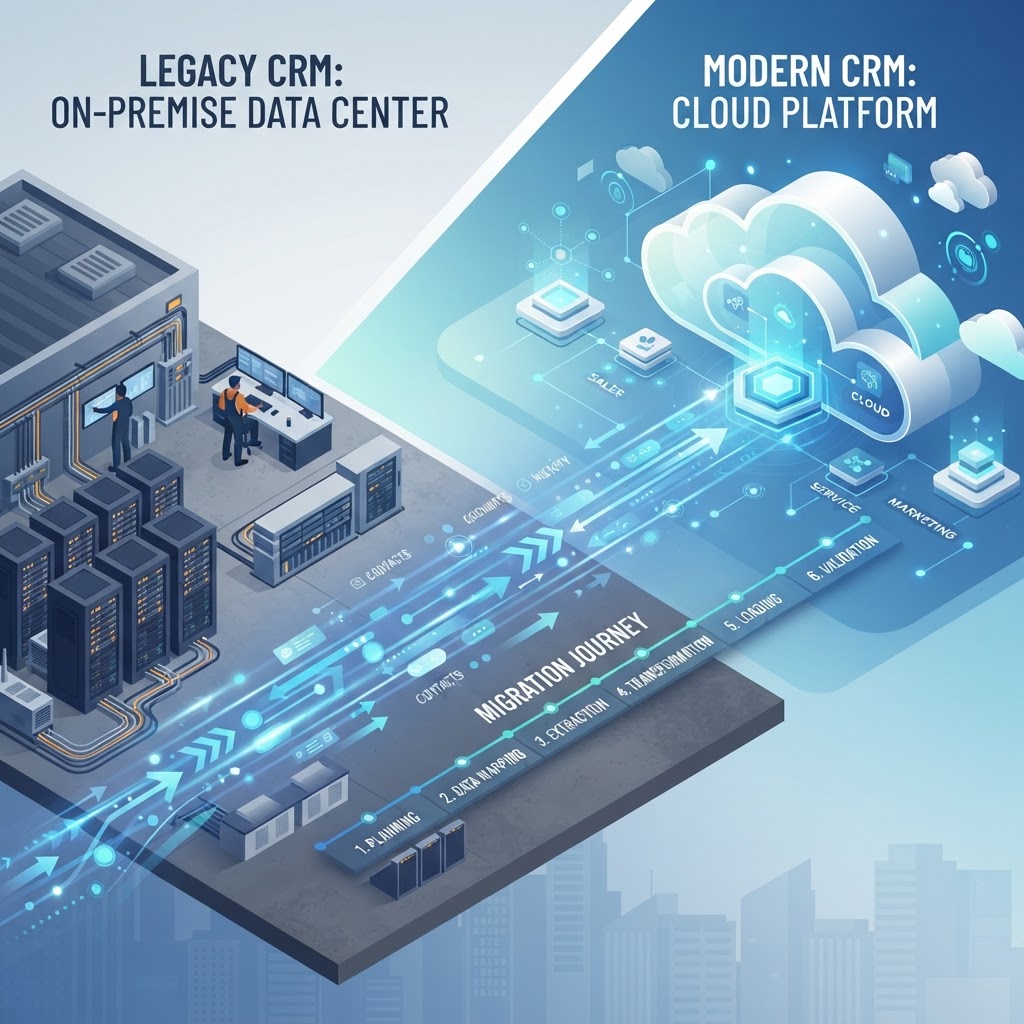
The momentum toward cloud-based CRM systems has reached a tipping point. According to recent market analysis, over 80% of enterprises now utilize cloud services, and SaaS CRM adoption among SMBs has grown consistently year-over-year. This isn’t just about following trends—it’s about business necessity.
The pandemic accelerated remote work adoption, making on-premise systems increasingly difficult to manage. Simultaneously, SaaS vendors have matured their migration tools and expertise, making the transition smoother than it was five years ago.
The trend is clear: businesses that delay migration risk falling behind on agility, scalability, and operational efficiency. But rushing into migration without understanding timelines can be equally problematic.
Typical CRM Migration Timeline: What to Expect
Short-Term Migrations: 1-3 Months
For small organizations with 50 or fewer users, minimal customizations, and straightforward data structures, migration can happen remarkably quickly. These projects typically involve:
- Basic data mapping and cleansing
- Standard feature configuration
- Limited custom field requirements
- Minimal third-party integrations
Leader CRM and similar modern SaaS platforms have streamlined onboarding processes specifically designed for rapid deployment in these scenarios. Many SMBs in this category complete full implementation in 6-12 weeks.
Mid-Range Migrations: 3-6 Months
This represents the most common timeline for typical SMBs. Organizations with 50-500 users, moderate customizations, and moderate data complexity generally fall here. These migrations require:
- Comprehensive data auditing and cleansing (often revealing significant data quality issues)
- Integration with 2-5 existing business systems
- Custom field and workflow configuration
- User training and change management programs
- Parallel system testing
The 3-6 month window allows adequate time for each phase while maintaining business continuity. Most delays in this range stem from unexpected data quality issues or scope creep, not from platform limitations.
Complex Migrations: 6-12+ Months
Larger organizations, those with highly customized legacy systems, or businesses requiring extensive integrations may need significantly longer. These projects typically involve:
- Multiple system dependencies
- Complex data relationships requiring careful mapping
- Extensive customization needs
- Regulatory or compliance requirements
- Geographic or organizational complexity
- Risk aversion necessitating extended testing phases
The good news: most SMBs don’t fall into this category, and even those that do can reduce timelines through better planning.
Critical Factors That Impact Migration Duration
1. Data Quality and Volume
Data is the hidden variable that derails most migration estimates. Organizations often discover during migration that their data is significantly messier than expected. Duplicate records, incomplete fields, outdated information, and inconsistent formatting can add 4-8 weeks to your timeline.
Industry insight: Forward-thinking companies are now conducting data audits before committing to a migration date. This pre-assessment phase (2-3 weeks) prevents nasty surprises later.
2. System Integrations
Every connected system adds complexity. If your on-premise CRM communicates with accounting software, ERP systems, marketing automation, or custom applications, each integration requires separate planning and testing.
Modern SaaS platforms like Leader offer pre-built integrations with common business tools, which can cut integration time dramatically. However, custom integrations still require dedicated development resources.
3. Organizational Change Management
Technical migration is only half the battle. User adoption, training, and organizational change management can extend timelines if not managed well. Some organizations allocate 30-40% of their total migration timeline to change management activities.
4. Legacy System Customization Complexity
Systems built over decades often contain deep customizations that reflect evolved business processes. Some customizations translate easily to SaaS platforms; others require process re-engineering. Understanding this gap early prevents compressed timelines later.
The 2024 Industry Trend: Accelerating Migration Timelines
Several factors are changing the migration landscape for SMBs:
Better Migration Tools
SaaS platforms now include sophisticated data import tools, automated mapping capabilities, and pre-built templates. These reduce manual work significantly. What took weeks of manual configuration in 2018 now takes days.
Specialized Migration Services
A growing ecosystem of migration specialists focuses specifically on CRM transitions. Many SaaS vendors, including Leader CRM, offer dedicated migration support. This expertise typically cuts 20-30% off total timelines.
Lower Customization Mindset
Organizations are increasingly adopting SaaS platforms with standard configurations rather than extensive customization. This represents a mindset shift: instead of forcing the platform to fit existing processes, teams optimize processes to fit the platform. This “cloud-native” approach dramatically reduces migration time.
Reduced Risk Tolerance for On-Premise Systems
The cumulative cost of maintaining aging on-premise systems (infrastructure, security updates, compliance challenges) has reached a tipping point. Many organizations now prioritize speed of migration over perfection, enabling faster timelines.
Planning Your CRM Migration: A Realistic Approach
Phase 1: Discovery and Planning (2-4 weeks)
Conduct your data audit, map system dependencies, assess customization needs, and establish a realistic timeline based on your complexity level.
Phase 2: Preparation (2-6 weeks)
Clean and organize data, set up your new platform environment, configure standard features, and prepare users for transition.
Phase 3: Migration (2-12 weeks)
Execute data transfer, build integrations, test thoroughly, and run parallel systems if necessary.
Phase 4: Deployment and Optimization (1-4 weeks)
Switch to the new system, provide intensive user support, monitor for issues, and optimize configurations based on real-world usage.
Why Migration Duration Matters for SMBs
For small and medium businesses, migration timeline directly impacts ROI and organizational disruption. A shorter timeline with proper planning means:
- Reduced training costs
- Faster time to value
- Lower risk of project failure
- Minimal business disruption
- Better user adoption rates
The businesses achieving the best outcomes aren’t rushing or dragging—they’re planning meticulously and executing with clear phases and milestones.
Making Your Migration Decision Today
The industry trend is unmistakable: cloud-based CRM systems are the present and future. The technology is mature, migration tools are sophisticated, and support ecosystems are robust. The question isn’t whether to migrate, but when and how to do it effectively.
Most SMBs can realistically complete a full CRM migration in 3-6 months with proper planning. Smaller organizations might do it in half that time. Even complex scenarios rarely exceed 12 months in the current environment.
The key is honest assessment of your complexity level, adequate time allocation for change management, and partnership with experienced vendors who understand your needs. With Leader CRM’s streamlined platform and proven migration methodology, your organization can join the majority of SMBs successfully operating in the cloud.
Your migration timeline starts with a single conversation. Understanding where you stand today determines how quickly you can move forward tomorrow.